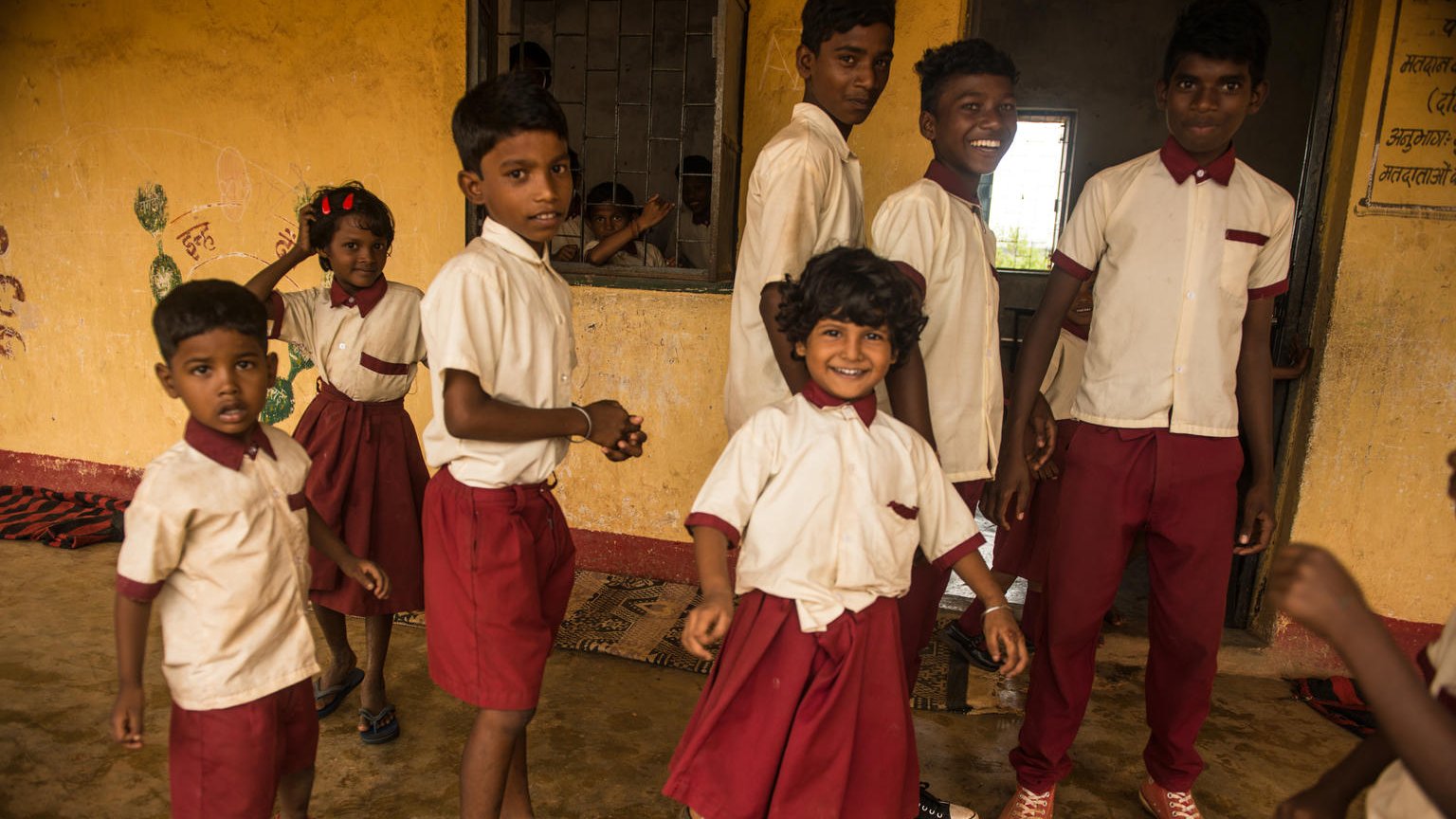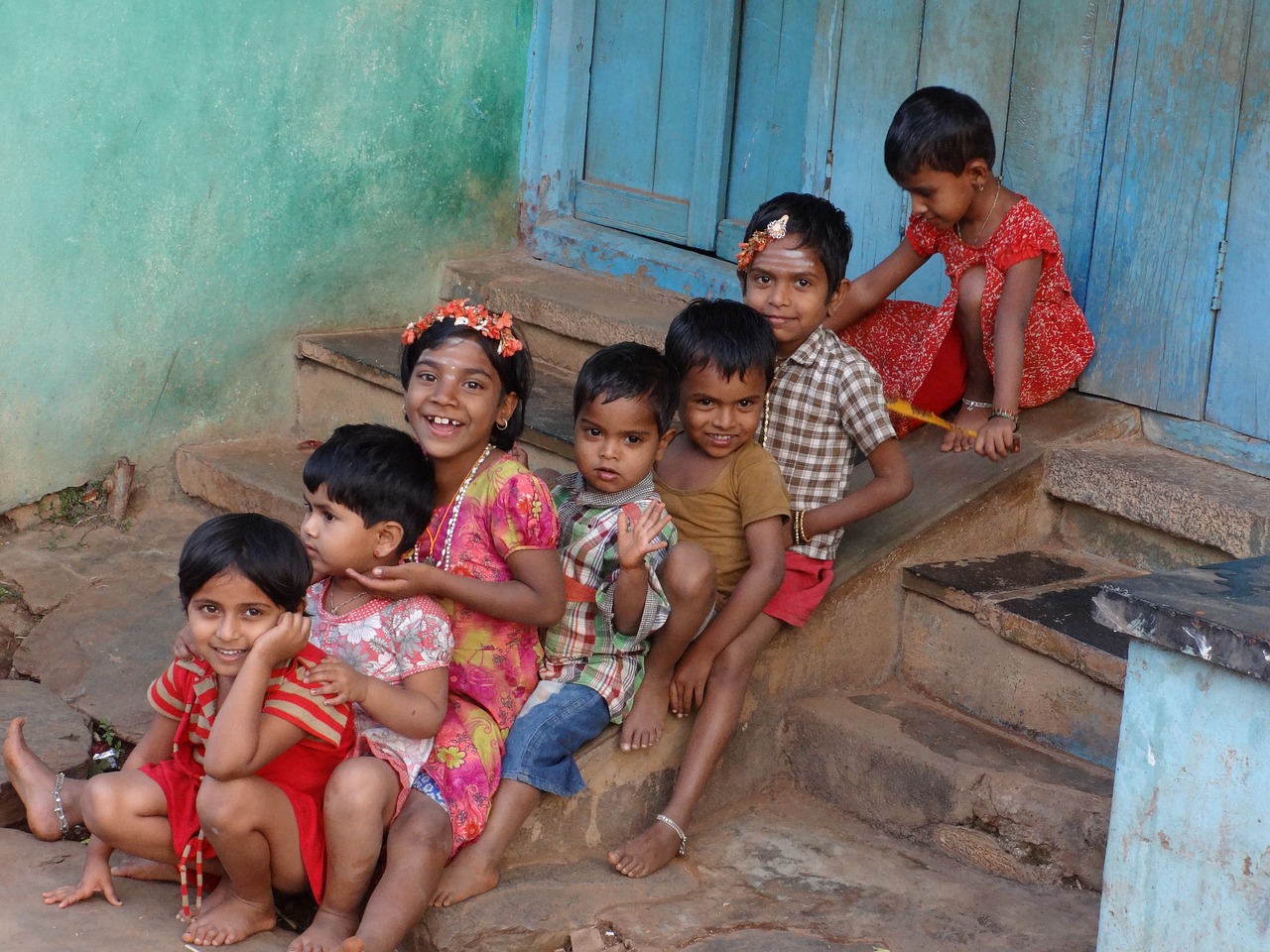
The Education Department of Puducherry could consider implementing an afterschool program to address the needs of children whose parents go to work during the day. The Department could collaborate with NGOs/CSOs and effectively run with the support of dedicated volunteers. Under this concept, qualified volunteers would assume a mentor role for the children, providing supervision, care, and guidance while their parents are at work. This nurturing environment would prioritize the safety and well-being of the children. The core objectives of the afterschool program would include fostering a
n interest in reading and extracurricular activities. Volunteers would engage the children in educational and recreational games, encouraging exploration of new interests and the development of valuable skills. By providing access to books and interactive learning opportunities, the program would aim to improve the children's literacy levels and overall engagement in education. Additionally, the program would offer academic support by assisting children with their homework, allowing them to dedicate more time to their studies. This focus on critical subjects would enhance the children's learning abilities and comprehension. The afterschool program would inspire children to pursue higher education and encourage them to achieve their dreams. By fostering self-belief, the program would empower children to overcome obstacles and strive for academic and personal success. An important outcome of the afterschool program would be improved school attendance and a potential reduction in primary school dropouts. By providing a safe and structured environment after school, the program would offer children a reliable place and this consistency would increase attendance and participation in school activities, contributing to overall educational progress and reducing the likelihood of dropping out.
Read more

Collaboration with Multiple Organizations: The active involvement of organizations such as the local self-government bodies, environmental missions, and other relevant institutions demonstrates a collaborative approach toward waste management. Reusing/Recycling: Encouraging the practice of reusing and recycling materials can help reduce waste generation and conserve valuable resources. Promo

tion of Nature-friendly Alternatives that can help mitigate the environmental impact of waste. Initiating legal action against unscientific and unhealthy waste dumping practices helps ensure responsible waste disposal and discourages environmental harm.

Read more
Sudha M Raj

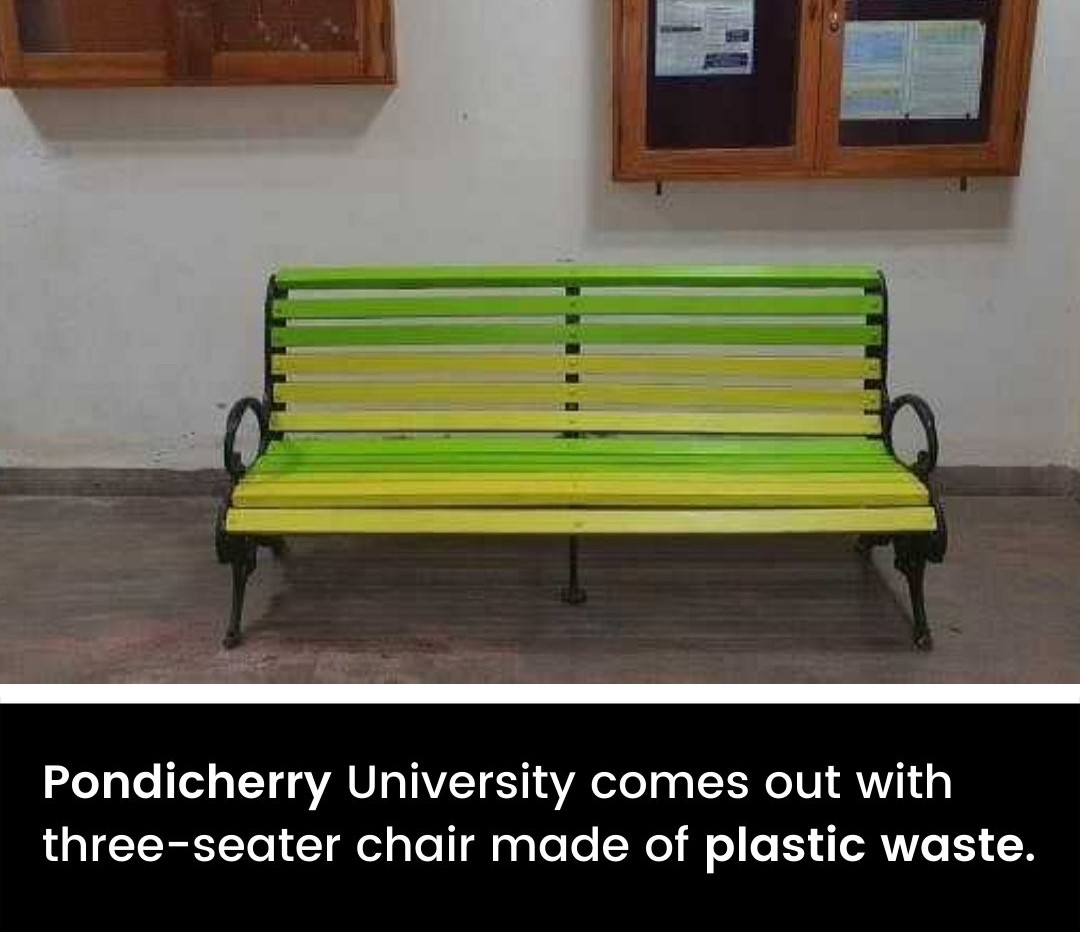
The Centre for Pollution Control and Environmental Engineering (CPCEE) of Pondicherry University has taken up a revolutionary initiative that showcases the potential of recycling. Their latest creation is a remarkable three-seater chair made entirely out of plastic waste. By utilizing discarded items such as bottles, wrappers, carry bags, straws, used pens, brushes, and covers, they have transform

ed these materials into functional furniture with a positive environmental impact. This innovative project stands as a testament to CPCEE's dedication to sustainability and its commitment to addressing the plastic waste crisis. By reimagining the purpose of plastic waste, they have breathed new life into these materials and prevented them from adding to the ever-growing landfill problem. Such innovative solutions can help Puducherry in tackling the plastic crisis affecting our communities.

Read more
Sudha M Raj

The Government of Jharkhand, in collaboration with UNICEF India, has recently launched a Standard Operating Procedures on School Preparedness that carry comprehensive hygiene protocols for schools to follow. As part of the program, over 22,000 teachers have already completed an e-course, equipping them with the necessary knowledge to become hygiene champions, and thus ensuring a good learning envi

ronment for all. This is a worthy model for Puducherry to emulate, ensuring a safe and nurturing learning environment for its teachers and students.

Read more
Sudha M Raj